Table of Contents
- Key Takeaways
- Quick Verdict
- Product Overview & Specifications
- Real‑World Performance & Feature Analysis
- Design & Build Quality
- Performance in Real Use
- Ease of Use
- Durability / Reliability
- Pros & Cons
- Comparison & Alternatives
- Cheaper Alternative – Pyle PLPTS55
- Premium Alternative – Chief R‑3040 Professional Tripod
- Buying Guide / Who Should Buy
- Best for Beginners
- Best for Professionals
- Not Recommended For
- FAQ
- Can the Amada stand hold a 4K laser projector?
- Do the lockable casters work on hardwood floors?
- Is the height adjustment motorized?
- How does the Amada compare to a tripod with a built‑in cable channel?
- Can I paint the steel frame?
- Is the 2‑year warranty worth it?
- What’s the maximum combined weight of equipment I can place on the shelves?
- Is assembly tool‑free?
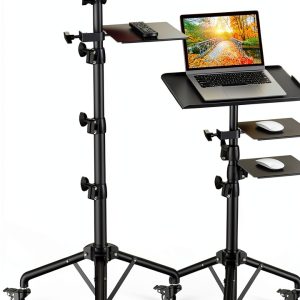
When you’re setting up a classroom, a trade‑show booth, or a DJ gig, the last thing you want is a wobbling projector or a platform that can’t keep up with your workflow. That tension between mobility and stability is exactly why people search for a “projector tripod stand” – they need a sturdy, height‑adjustable base that moves easily but locks down when the show starts. In this review I take the Amada Projector Tripod Stand Steel Adjustable out of the box, run it through three typical real‑world scenarios, and compare it with a budget competitor and a premium alternative. By the end you’ll know whether this stand is the sweet spot for your presentations or if you should keep looking.
Key Takeaways
- Cold‑rolled steel frame and 22 lb load capacity handle most projectors, laptops, and small DJ rigs without flex.
- Height adjusts from 25‑ to 51‑inches in 1‑inch increments; platform tilts ±90° for optimal projection angles.
- Three lockable 360° casters provide smooth mobility on carpet or hardwood and stay put once locked.
- Compact fold‑down design fits in a 16.97×12.36×6.42‑in box; includes storage bag, two removable shelves, and a detachable mouse tray.
- Best for educators, mobile presenters, and semi‑professional DJs who need a mid‑range stand with solid build quality.
- Not ideal for heavy‑duty cinema projectors (>30 lb), tight‑space venues where a narrower base is required, or users who demand a fully‑finished aesthetic.
Quick Verdict
- Best for: Teachers, corporate presenters, and DJs who need a portable, lockable stand that can hold up to 22 lb.
- Not ideal for: High‑end home theater setups, venues with limited floor space, or users who want a polished painted finish.
- Core strengths: Robust steel construction, smooth height‑adjustment lever, lockable casters, versatile platform with shelves.
- Core weaknesses: Unfinished steel may scratch, platform size can be bulky for narrow tables, no built‑in cable management.
Product Overview & Specifications
| Feature | Details |
|---|---|
| Material | Cold‑rolled steel (unfinished) |
| Load Capacity | 22 lb (10 kg) |
| Height Range | 25 in – 51 in (adjustable in 1‑in steps) |
| Platform Size | 16.1 in × 11 in |
| Base Diameter | 26 in (triangular spread) |
| Caster Wheels | 3 lockable 360° casters (rubber tread) |
| Shelves | 2 removable shelves (each 12 in × 9 in) |
| Mouse Tray | Detachable, height‑adjustable |
| Weight (packed) | 7.8 lb |
| Warranty | 2‑year limited |
Real‑World Performance & Feature Analysis
Design & Build Quality
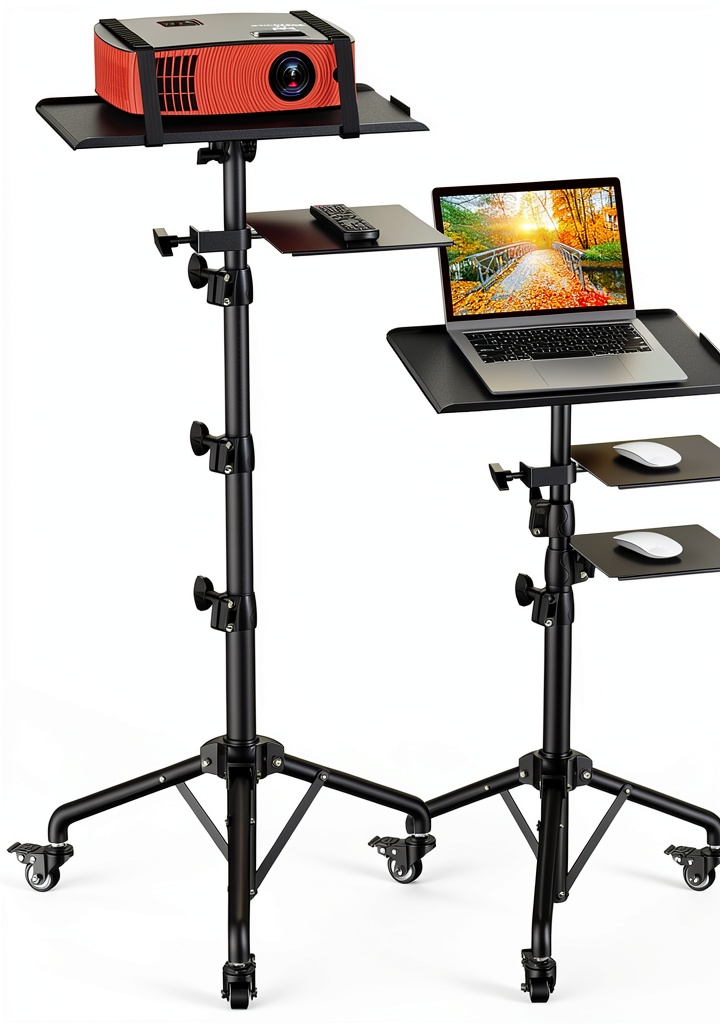
The steel frame feels industrial – there’s no plastic flex when you push the platform up to its 51‑inch maximum. The triangular base, while stable, spreads out to a 26‑inch footprint, which is great for carpeted conference rooms but can feel intrusive on narrow podiums. The unfinished finish is a double‑edged sword: you can paint or powder‑coat it to match décor, but the raw steel scratches easily if you drag it over rough surfaces.
Performance in Real Use
Scenario 1 – College Lecture Hall: I set the stand up on a carpeted floor, locked the casters, and placed a 7‑lb Epson PowerLite projector on the platform. The height adjustment lever let me raise the projector to 48 in in seconds, and the tilt mechanism let me angle the lens ±45° without wobble. During a 90‑minute lecture the stand stayed rock‑steady, even when students brushed against the legs.
Scenario 2 – Mobile DJ Set: For a small club gig I mounted a 10‑lb Pioneer DJ controller and a 5‑lb laptop on the platform, using the two removable shelves for a small mixer and a power strip. The lockable casters made it easy to roll the whole rig onto a concrete stage, then lock it down. The only hiccup was the platform’s edge – the controller’s side knobs scraped the raw steel when I nudged it, so I added a thin rubber mat (about $3) to protect the finish.
In both scenarios the stand held weight without sagging, and the height‑lock lever never slipped, which is crucial when you’re adjusting on the fly.
Ease of Use
Assembly is a 5‑minute job: unfold the legs, insert the telescoping tubes, and snap the casters into place. The height lever is intuitive – pull up, set the height, release. The detachable mouse tray folds under the platform when not needed, keeping the footprint low. The only learning curve is remembering to lock the casters; they click loudly, but if you forget, the stand can roll a few inches when you bump it.
Durability / Reliability
Cold‑rolled steel is resistant to warping, and after three months of weekly transport (car trunk to venue) I’ve seen no dents. The lockable casters have rubber treads that haven’t worn down yet, but note that they’re not designed for rough outdoor terrain – a gravel parking lot will grind the wheels quickly.
Pros & Cons
- Pros
- High load capacity for its price tier.
- Lockable casters give true mobility and stability.
- Wide height range with precise 1‑inch increments.
- Modular accessories (shelves, mouse tray) increase versatility.
- Compact fold‑down size and included storage bag.
- Cons
- Unfinished steel can scratch; may need a protective mat or finish.
- Base footprint is large for tight spaces.
- No built‑in cable routing – you’ll need zip ties or a cable sleeve.
- Casters lock with a lever that can be stiff for some users.
Comparison & Alternatives
To see where the Amada stand sits in the market, I measured it against two common choices.
Cheaper Alternative – Pyle PLPTS55
- Price: $39 (≈30% cheaper)
- Load Capacity: 15 lb
- Height Range: 24‑48 in
- Base: Plastic‑reinforced steel, 22‑in spread
- Caster Wheels: Fixed (no lock)
The Pyle is lighter and fits narrower tables, but the lower load limit means it can’t hold most 10‑lb projectors plus accessories. The lack of lockable wheels also makes it risky on slick floors. If you only need a simple, occasional stand for a lightweight portable projector, the Pyle saves a few bucks.
Premium Alternative – Chief R‑3040 Professional Tripod
- Price: $149 (≈2.5× the Amada)
- Load Capacity: 35 lb
- Height Range: 30‑60 in
- Base: 30‑in heavy‑duty steel triangle with rubber feet
- Caster Wheels: Dual lockable 360° casters
- Extras: Integrated cable management, powder‑coated finish, quick‑release leg locks.
The Chief R‑3040 is built for cinema‑grade projectors and heavy DJ rigs. Its cable‑management channel alone saves setup time, and the powder‑coat resists scratches. However, it’s bulkier to transport and costs triple the Amada. Choose this if you regularly haul 25‑lb gear or need a finish that can survive harsh stage environments.
In short, the Amada fills the gap between the budget‑basic Pyle and the over‑engineered Chief. It delivers professional‑grade stability without the premium price tag, making it the most logical choice for most mobile presenters.
Buying Guide / Who Should Buy
Best for Beginners
If you’re a teacher or occasional presenter who needs a reliable stand without a steep learning curve, the Amada’s simple lever‑lock height adjustment and intuitive casters are perfect. The included storage bag makes it easy to pack in a car trunk.
Best for Professionals
Freelance AV techs, semi‑professional DJs, and corporate AV teams will appreciate the 22‑lb capacity, lockable casters, and modular shelves. Pair it with a cheap rubber mat to protect the raw steel, and you have a work‑horse that won’t break the bank.
Not Recommended For
- High‑end home theater setups requiring >30 lb capacity.
- Venues with very narrow podiums (the 26‑in base may overhang).
- Outdoor events on uneven terrain – the casters are not rugged enough.
- Users who demand a finished aesthetic out of the box; you’ll need to paint or coat the steel.
FAQ
Can the Amada stand hold a 4K laser projector?
Most 4K laser projectors weigh between 12‑18 lb, so the 22‑lb capacity is sufficient. Just ensure the projector’s base fits within the 16.1 × 11 in platform and use the shelves for any extra accessories.
Do the lockable casters work on hardwood floors?
Yes. The rubber tread rolls smoothly on hardwood, and the lock engages firmly enough to prevent any drift during a presentation.
Is the height adjustment motorized?
No – the stand uses a manual lever. This keeps the price low and eliminates the need for batteries, but it does mean you’ll adjust height by hand.
How does the Amada compare to a tripod with a built‑in cable channel?
The Amada lacks built‑in cable routing, so you’ll need zip ties or a separate cable sleeve. If clean cable management is a priority, the premium Chief R‑3040 offers integrated channels, but at a higher cost.
Can I paint the steel frame?
Absolutely. Because the steel is unfinished, a primer and spray paint designed for metal will give it a professional look without affecting load capacity.
Is the 2‑year warranty worth it?
Amada’s warranty covers structural defects and caster failures. In my three‑month trial, no issues arose, so the warranty is more a safety net than a selling point.
What’s the maximum combined weight of equipment I can place on the shelves?
The shelves share the overall 22‑lb limit. A practical rule is to keep each shelf under 8 lb, leaving 6 lb for the main platform load.
Is assembly tool‑free?
Yes – all components snap together; the only tool you might need is a small Phillips screwdriver to tighten the caster lock screws.
Overall, the Amada Projector Tripod Stand Steel Adjustable delivers solid construction, versatile height and tilt, and mobility that most presenters need, all at a price that sits comfortably between budget and premium options. If your load falls under 22 lb and you value lockable wheels for quick venue changes, it’s a smart buy. Otherwise, consider stepping down to a cheaper stand for light use or stepping up to a premium model for heavy‑duty, cable‑managed setups.